
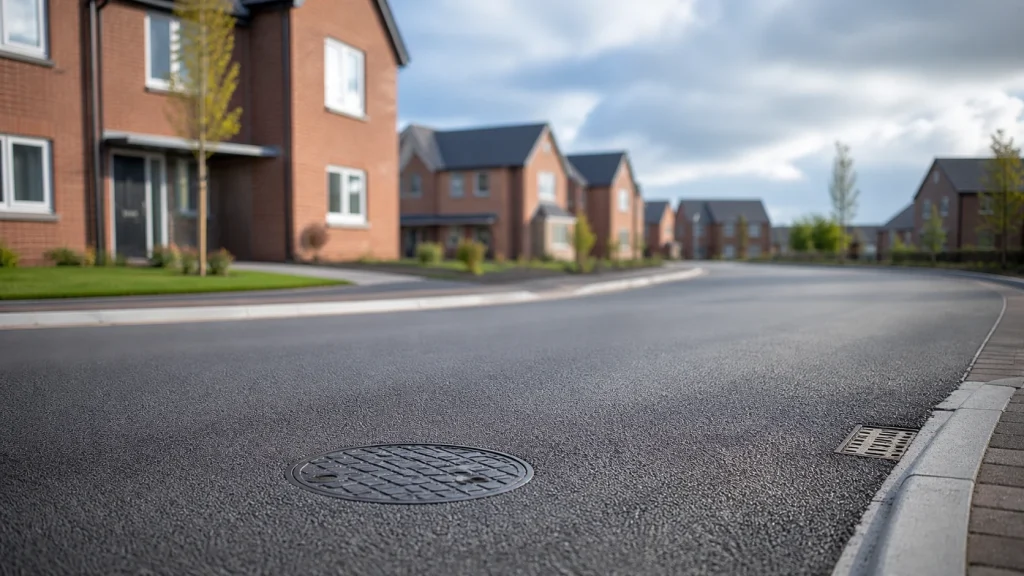
Sewer adoption is one of those project stages where detail matters. A development can be well built, well managed and close to completion, yet still need careful inspection evidence before assets can move smoothly through the adoption process.
That is where experienced Section 104 inspection support makes a practical difference. By identifying issues early, coordinating remedial works and keeping records clear, developers can protect handover progress and give adopting authorities the confidence they need.
Why sewer adoption inspections matter
Under a Section 104 agreement, new sewers and associated drainage assets are intended to be adopted by the relevant authority once they have been built, inspected and accepted. The inspection process is not simply a final box to tick. It is a structured check that the installed drainage system matches the approved design, performs as intended and is supported by the right evidence.
For developers, the value is practical. Good inspection management helps site teams understand exactly what is needed before adoption can progress. It can highlight incomplete works, workmanship issues, access problems, chamber defects, level discrepancies, pipe condition concerns, missing records or items that need further clarification. When these points are found and managed in good time, they are much easier to resolve within the wider project programme.
Sewer adoption also connects with other parts of site delivery. Drainage often sits alongside adoptable roads, footways, service corridors, pumping stations and estate infrastructure. A missed drainage issue can affect surfacing, plot completion, landscaping, legal handover or wider discharge of obligations. That is why developers often benefit from inspection support that understands the adoption process as a whole, not only the individual asset being checked.
The role of Section 104 inspections
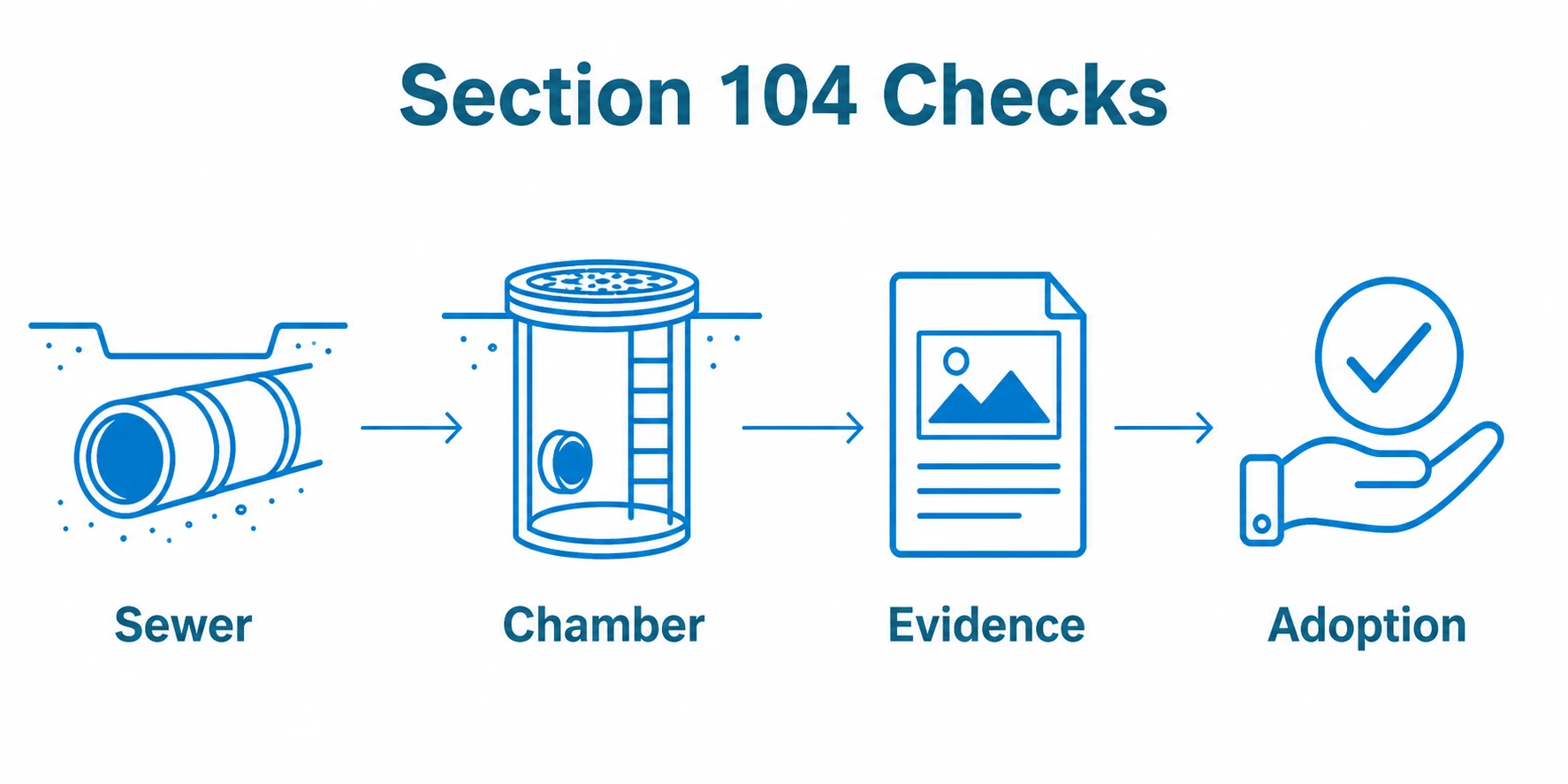
Section 104 inspections focus on the assets that are to become adopted public sewers. They can include foul drainage, surface water drainage, manholes, chambers, outfalls and associated infrastructure, depending on the approved scheme. The purpose is to confirm that construction aligns with the approved drawings, relevant standards and the adopting authority requirements.
A useful inspection does more than point out faults. It gives developers a clear route to resolution. That may mean documenting defects, checking whether remedial works are complete, supporting communication with the site team, reviewing evidence and helping prepare the site for further inspection stages.
Common areas of attention include chamber benching, step irons or ladders, cover levels, pipe alignment, debris, infiltration, workmanship around connections, silt build up, access safety and the relationship between finished surfaces and drainage features. CCTV surveys, testing records and As Built information may also need to be coordinated so the evidence package is consistent.
Advance Two provides adoption services that include Section 104 inspections and remedial support, helping developers keep the process organised from inspection through to close out.
How Section 38 and Section 278 expertise supports drainage adoption
Although Section 104 is the direct agreement for sewer adoption, it rarely exists in isolation on a live development. Section 38 works relate to new adoptable highway infrastructure, while Section 278 works relate to changes or improvements connected to existing highway infrastructure. Both can influence the timing and condition of drainage assets.
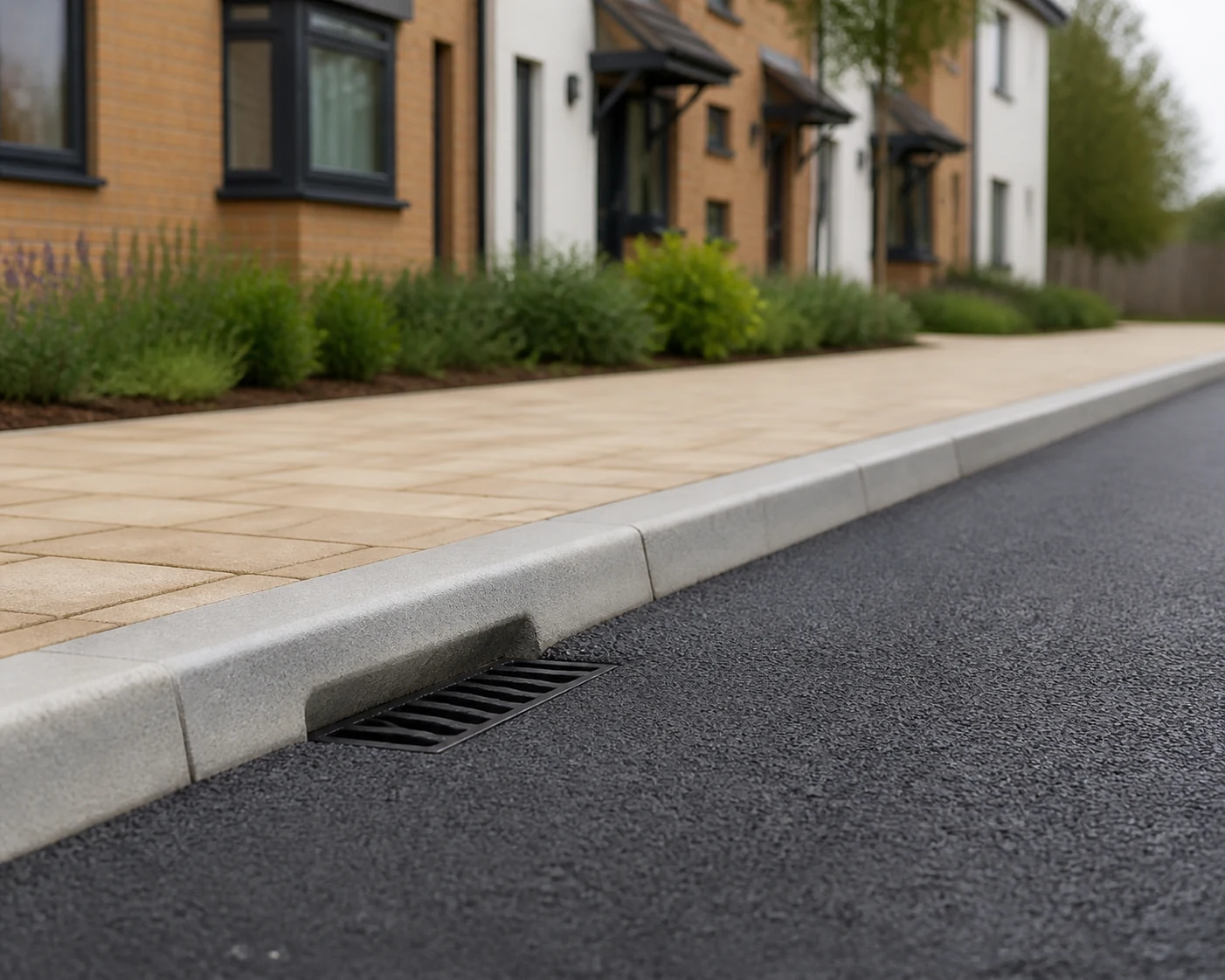
For example, final cover levels, gullies, kerbs, carriageway construction, service crossings and access arrangements can all affect whether drainage assets are ready for adoption. If a chamber sits within a highway area, the finished surface and cover detail need to be right. If remedial drainage works are needed after road construction has advanced, coordination becomes important so that one workstream does not undermine another.
Inspection teams that understand Section 38 and Section 278 requirements can spot these interface risks earlier. They can help developers plan inspection timing around surfacing, utility works, plot occupations and final finishing. This creates a more joined up route to adoption, where drainage, highways and external works are checked as connected parts of the same handover process.
This is also where wider technical services can add value, especially when developers need practical support with records, drawings, inspections and coordination across different adoption workstreams.
Preventing adoption snags before they affect handover
Most adoption snags are easier to manage when they are visible early. A proactive inspection approach helps developers move from reactive fixes to planned close out. Instead of waiting until the end of the programme, inspections can be used to build a clear picture of what is complete, what needs attention and what evidence is still outstanding.
This is particularly useful where several parties are involved. Designers, contractors, groundworkers, engineers, site managers and adopting authorities may all need to provide information or complete actions. A clear inspection record gives everyone a shared reference point. It reduces ambiguity and helps the project team focus on the specific items that need to be closed.
Remedial works are a normal part of preparing infrastructure for adoption. The key is to define them clearly, complete them properly and record them in a way that supports the next inspection stage. For Section 104 remedial works, this can include correcting chamber details, clearing lines, rectifying defects, adjusting covers, improving access or arranging follow up survey evidence. For pumping station remedials, the scope may involve more specialist checks, commissioning evidence, access arrangements and mechanical or electrical considerations.
When remedials are handled by a team that understands the adoption standard being worked towards, the process becomes more controlled. The site team knows what good looks like, and the developer has a clearer path from inspection finding to adoption progress.
Records, drawings and evidence make the process smoother
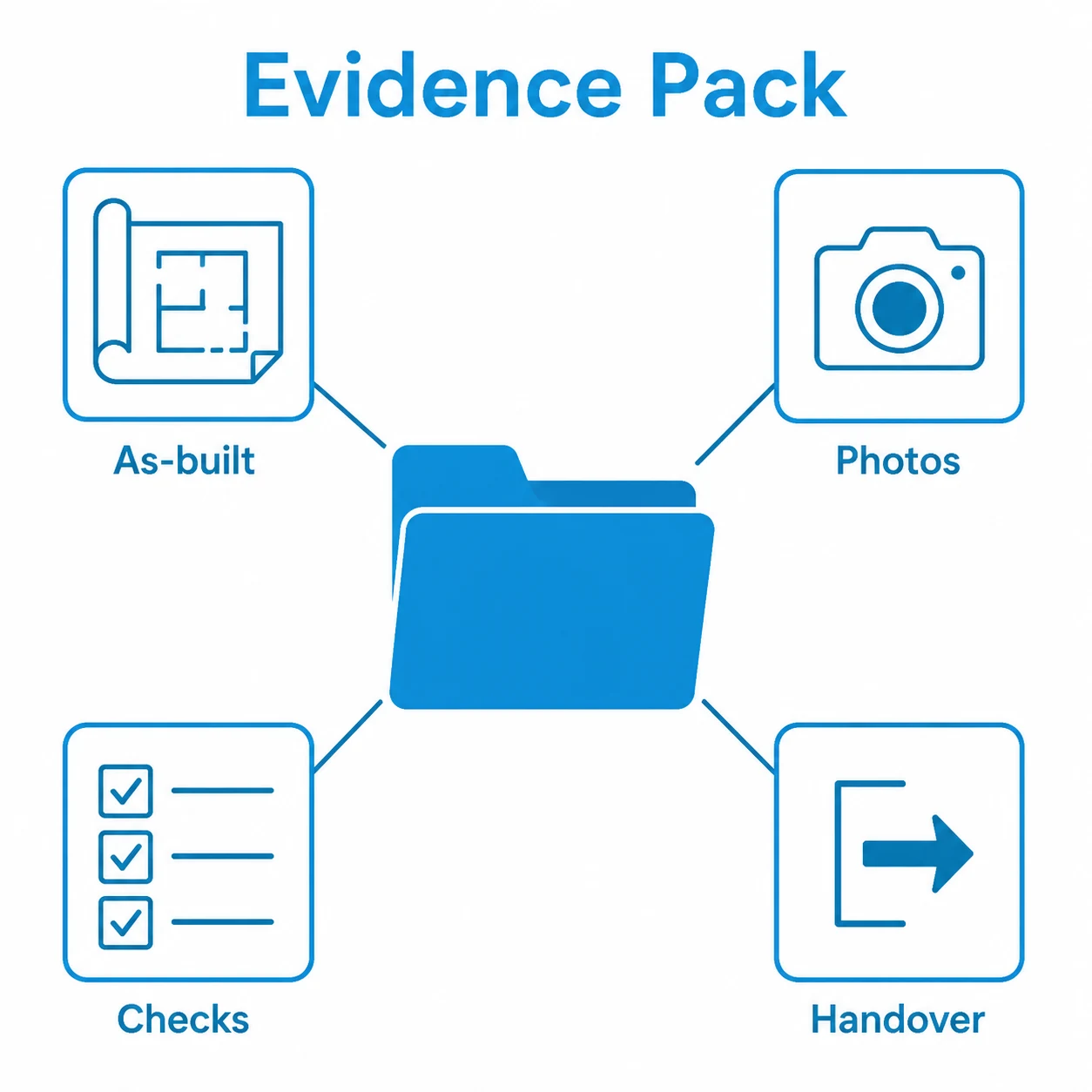
Inspection quality is only part of the adoption process. The supporting records matter as well. Adopting authorities need confidence that the assets on site match the approved and final information. Developers need a reliable evidence trail that shows what was built, inspected, tested and, where needed, remediated.
As Built drawing packages are central to this. They help confirm final asset positions, levels, connections and details. If drawings are incomplete or inconsistent with site conditions, questions can arise late in the process. Good drawing coordination helps prevent that by bringing technical records into line with what has actually been delivered.
The same principle applies to inspection notes, CCTV records, test certificates, commissioning information, remedial evidence and correspondence. A well organised package makes review easier for everyone involved. It also helps internal project teams, because information can be retrieved quickly when queries arise.
Developers do not need more paperwork for the sake of it. They need accurate, relevant and usable information that supports adoption. When inspections and records are managed together, the whole process becomes clearer.
Choosing the right inspection support
The right inspection support should feel practical, informed and easy to work with. It should help the developer understand what is required, what has already been achieved and what needs to happen next. Technical knowledge matters, but so does communication. A good inspector can explain issues clearly to site teams, record findings in a useful format and keep the adoption objective in focus.
It is also important to choose support that understands the full range of adoption related services. Section 104 inspections, Section 38 inspections, Section 278 inspections, pumping station inspections, remedial works and As Built packages often overlap. A team that can deal with these connected needs can help reduce handover friction and keep progress visible.
For developers, the best time to involve inspection expertise is before adoption pressure builds. Early input allows the team to review likely pinch points, plan inspection stages and make sure evidence is being captured as work progresses. That creates a calmer route through final checks and helps the development move towards completion with confidence.
- Section 104 inspections help confirm that adoptable sewer assets match the approved design and required standards.
- Section 38 and Section 278 knowledge is valuable because drainage, highways and external works often affect each other.
- Early inspections help developers identify adoption snags while they are still straightforward to plan and resolve.
- Clear remedial records, CCTV evidence, testing information and As Built drawing packages all support smoother adoption progress.
- Experienced inspection support gives site teams a practical route from finding to close out.
Frequently asked questions
What is checked during a sewer adoption inspection?
A sewer adoption inspection typically checks whether drainage assets have been built in line with the approved design and relevant adoption requirements. This can include chambers, covers, pipe condition, access, levels, connections, cleanliness, workmanship and supporting evidence such as surveys or testing records.
When should developers arrange Section 104 inspection support?
Developers should consider inspection support before final handover pressure builds. Early involvement helps identify issues, coordinate remedials, confirm evidence requirements and prepare the site for formal adoption stages.
Why do Section 38 and Section 278 works matter for sewer adoption?
Highway works can affect drainage assets through cover levels, gullies, surfacing, service routes and access arrangements. Understanding Section 38 and Section 278 interfaces helps developers coordinate works so drainage adoption can progress alongside wider infrastructure handover.
What happens if remedial works are needed?
Remedial works should be clearly recorded, completed to the required standard and supported with evidence where needed. Once complete, the relevant assets can be checked again so the adoption process can continue with a clear close out record.
Need practical adoption inspection support?
Advance Two can help with Section 104, Section 38 and Section 278 inspections, pumping station inspections, remedial works and As Built drawing packages.